
How to get more views on Vinted in 2026: the Drip Effect to multiply your sales
The drop in views that many second-hand clothing sellers experience almost always comes from uploading too many listings at once. Having a pile of items stacked in the bedroom, photographing them in a rush and publishing 20 or 30 products one after another in under an hour is a very common mistake. Even though you might think that the more clothes you upload at once, the better your chances of a sale, the reality of second-hand apps in 2026 is that this way of working makes your listings completely invisible.
The main screens on Vinted no longer show clothing simply in order of arrival. The system’s smart search engine scrutinises the behaviour of every account to decide who to prioritise and who to hide. If you want to understand why your items are stuck on zero views after spending an entire afternoon preparing them, the answer lies in learning how to organise your uploads so the app doesn’t mistake your profile for a spam account.

Why uploading your entire catalogue at once destroys your visibility
Uploading more than 10 items in a row on a single afternoon causes the system to flag your profile as a heavy account, immediately reducing the reach of your wardrobe. Second-hand apps need visual variety and penalise bulk dumps to prevent a single seller from flooding the main storefront with their products. Because of this protective filter, most of your freshly published clothing will be buried at the bottom of the search results without buyers ever seeing it.
When you stack dozens of listings in a few minutes, overall views on your profile fall sharply. Accounts that publish in bulk see a drop of up to 60% in their initial impression rate during the first 24 hours, according to data from market research consultancy Appinio. This happens because the platform packages all your items into a single block; if the first product in that batch doesn’t get a user to stop and look at it, the app assumes the rest of the lot is of no interest and hides it from searches.
What’s more, publishing all your stock at once mimics the behaviour of bots and fake shops, which triggers moderation system alerts. By flooding your account at once, you risk your listings entering a silent manual review by the support team. This system pause completely freezes incoming views during the hours of the day when the most people are online to sell more, undoing all the work you’ve done.
What the Drip Effect is: spaced, strategic uploads to work the algorithm in your favour
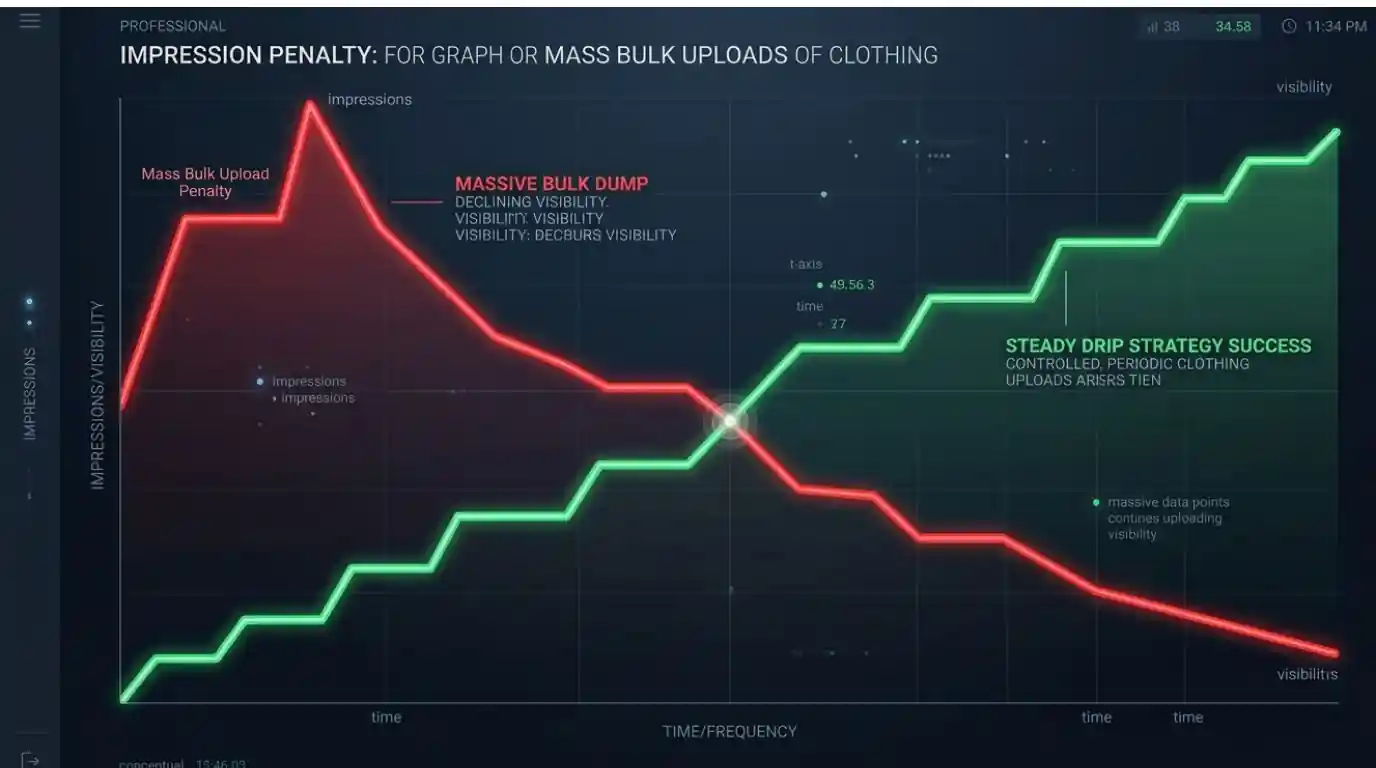
The Drip Effect consists of publishing your products in a distributed, intelligent way throughout the day instead of launching your entire wardrobe all at once. This technique keeps your profile in a constant state of freshness, forcing the search engine to display your account on the screens of buyers who are online at any given moment. By spacing out the release of your clothing, you give each item its own chance to shine in the feed without competing with your other listings.
This consistency in publishing shows the app that you’re a real, trustworthy and highly engaged user. Publishing your listings in a spaced-out way increases by 45% the chances of appearing in the app’s “Suggested items” section, as detailed in Vinted Europe’s performance reports. The system rewards profiles that bring new content in a staggered way because they help buyers spend more time browsing the platform throughout the week.
It’s very important to clarify that this strategy doesn’t limit you to uploading only one or two items a day. You can upload a moderate volume of items daily (no more than 10 items regularly) and if you do it in a spaced-out way, interspersing it with organic actions like using the platforms’ search engine, adding to favourites and spreading your uploads throughout the day, you’ll get better results. This natural behaviour shows the system that you are a real flesh-and-blood person interacting in a healthy way, which triggers an extra visibility boost for all your clothing.
To keep this under control easily and without stress, it’s a great help to rely on tools that take the boring work off your plate. Combining these strategic uploads with the steps explained in the EasyWList Ultimate Guide: Move Your Vinted Wardrobe to Wallapop in Seconds will let you manage your clothing like a professional with minimum effort. The real trick to online sales isn’t spending the whole day glued to your phone, but planning your publishing moments so the search engine works in your favour.
Peak hours in 2026: the best times to publish your clothing
The ideal moments to distribute your publications coincide with the lunch break and the evening wind-down, which are the windows with the most connected buyers. Uploading a listing right at the start of each of these windows ensures your clothing appears at the top of the results when people open the app to browse for deals. If you publish your products in the small hours or during dead periods, your items will lose their novelty factor before your potential customers even pick up their phone.
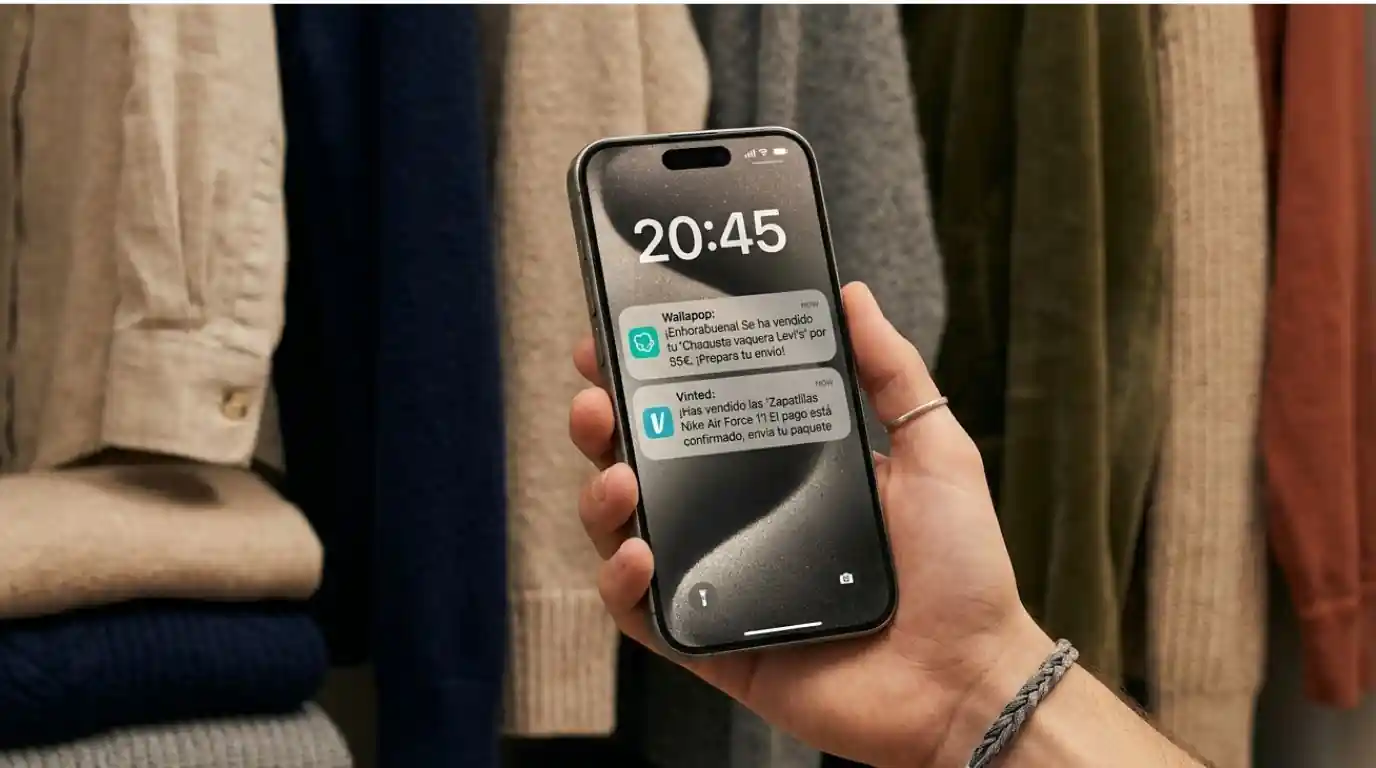
Timing your listings to the free moments in users’ days is the key to clearing your wardrobe much faster. 72% of purchases and messages on second-hand platforms in Spain are concentrated in two very clear slots: from 12:00 to 14:00 and from 20:00 to 22:00, according to the Statista re-commerce consumption barometer. Organising your drip strategically means spreading your publications within these time frames, capturing the traffic of users who check their phone while having lunch or relaxing on the sofa.
Timing your listings this precisely is twice as effective if you decide to sell your clothing on more than one app at the same time. If you already know the tips to create the perfect listing on Wallapop and Vinted and use the method to move your listings from Vinted to Wallapop in 1 minute, coordinating these spaced uploads across both channels will let you multiply your views without having to spend money on costly featured listing options.
How to organise your inventory with EasyWList
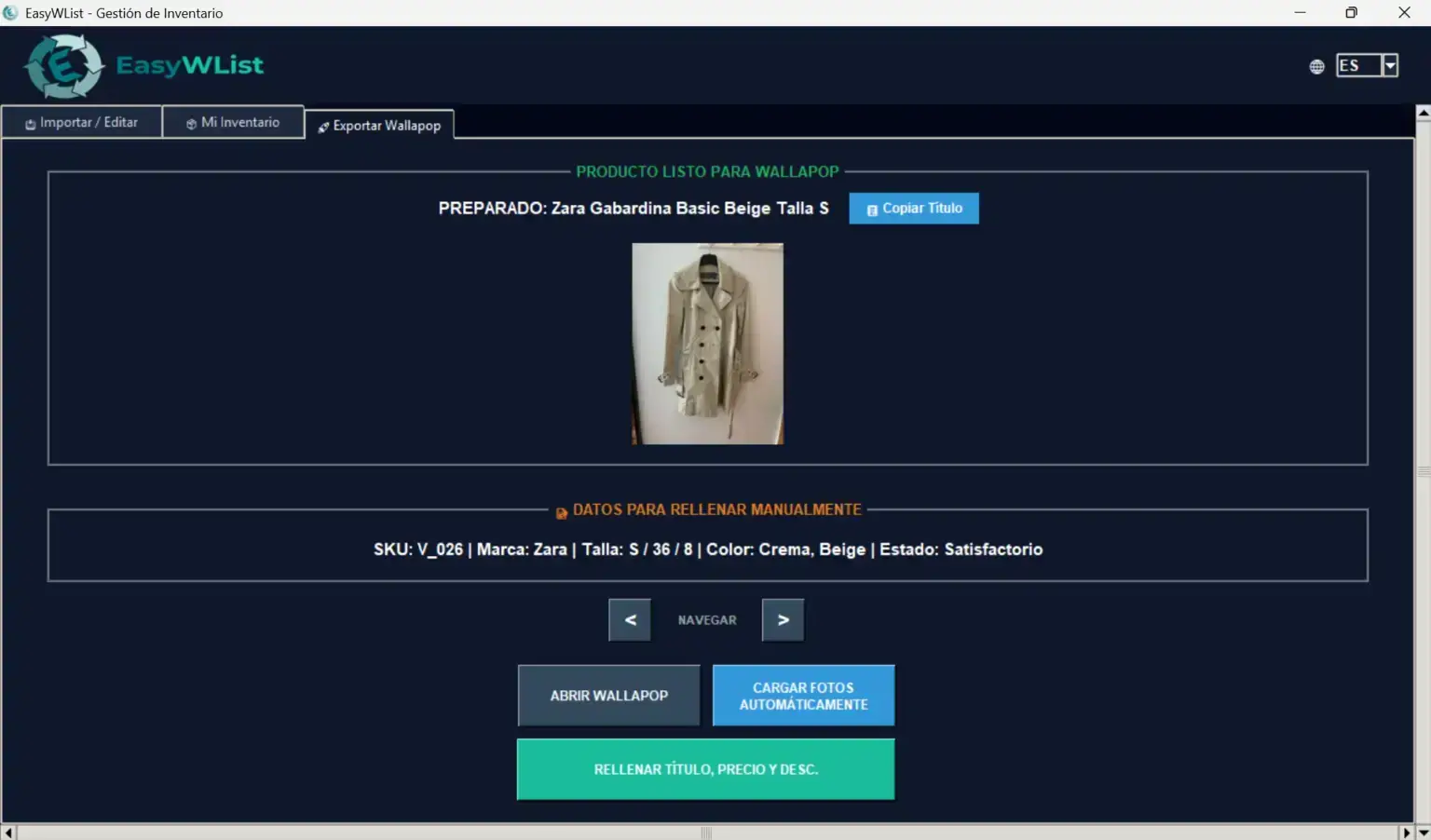
Working in an organised way requires storing your item data externally so you can publish them one by one with a single click when the right moment comes. The secret of top sellers is to take photos and write descriptions for many items at once in their spare time, but save them to upload online in a spaced-out way. Keeping this information store outside the apps means you don’t depend on your phone’s memory, which often lets you down.
To set up a comfortable organisational system that lets you publish strategically without overcomplicating things, it’s best to follow these steps in order:
Create an organised database. You can use an organised database to clearly note your items, prices and details for each piece of clothing. A tip: use simple columns to separate titles and prices so you can copy them in seconds when you’re ready to publish.
Make the most of EasyWList’s advantages. Instead of filling in spreadsheets by hand, you can use EasyWList‘s own visual inventory system, which does the hard work for you by downloading information directly from the internet. A tip: this feature lets you see photos of your items at a glance on your computer without needing to dig through your smartphone gallery.
Track the status of your items. Organise your stock by marking each item with clear labels like “In inventory”, “Listed” or “Sold” so you know exactly what’s available. A tip: update these statuses every time you close a deal so you don’t accidentally offer something you’ve already sold.
Release your clothing at the best times. Use the data saved in your spreadsheet or in the app to launch a couple of listings in a staggered way during the day’s peak traffic hours
Frequently asked questions about how to get more views on Vinted
Why do my Vinted listings suddenly have no views?
−A sudden loss of views usually happens when you've been penalised for uploading a lot of items at once, or because your user trust score has dropped from going several days without opening the app. Platforms automatically hide products from accounts that don't show consistent, balanced activity over the course of weeks.
How many items can you upload per day on Wallapop and Vinted without penalty?
+The safe number for private accounts is a moderate volume of up to 10 items per day, as long as you publish them in a spaced-out way and intersperse them with normal use of the app. Exceeding this amount in an uncontrolled way can trigger the filters due to suspected unregistered commercial activity, limiting your profile's organic reach.
What is the best time to publish second-hand clothing in 2026?
+The busiest periods in Spain are from 12:00 to 14:00 and from 20:00 to 22:00. Staggering your uploads at the start of these windows guarantees you connect with the 72% of daily interactions and purchases that take place on second-hand platforms.
Is there any point in deleting and re-uploading a product to gain visibility?
+This works very well, but only if you change some details of the original listing before republishing it. If you upload exactly the same photos with the same title, the system will detect that the product is a duplicate and place it in its old position, losing you the benefit of a new listing.
Double your views today: space out your listings with EasyWList
Maintaining consistent, spaced-out activity on your profiles is the most solid organic reach strategy in 2026, but executing this process manually consumes too much time. Watching the clock to upload items individually during peak hours disrupts your routine and is unsustainable in the long run. If you sell on Vinted and want to replicate this strategic flow on Wallapop to multiply your income, you need a system that eliminates the administrative work entirely.
This is where EasyWList transforms your sales routine. Our Windows desktop tool lets you process your entire stock in bulk locally, while maintaining a strictly metered and sequential digital distribution. You can automatically extract your Vinted listings in a single afternoon and store them centrally on your computer.
That way, when the peak buyer time slots arrive, you only need to select the corresponding item and publish it on Wallapop with a single click. You’ll keep the feed algorithm at its maximum technical performance, your account will gain constant visibility over the competition and you’ll protect your organic reach without spending entire afternoons repeating mechanical tasks.
Download the free beta today and secure your early-adopter advantages before the testing phase closes.