
How to get more and better reviews on Vinted and Wallapop
Two sellers have the same item for sale at the same price, with similar photos. One has 8 reviews and an average of 4.3 stars. The other has 150 reviews and an average of 4.9. The second one sells first, almost always.
Reviews do something that no well-written title and no perfect photo can do on its own: they remove the buyer’s uncertainty. In second hand, the buyer can’t touch the item, doesn’t know the seller and has no shop guarantee. Everything that reduces that perceived risk speeds up the buying decision. A profile with many positive reviews is the best signal that everything is going to go smoothly.
Reviews do something that no well-written title and no perfect photo can do on its own: they remove the buyer’s uncertainty. In second hand, the buyer can’t touch the item, doesn’t know the seller and has no shop guarantee. Everything that reduces that perceived risk speeds up the buying decision. A profile with many positive reviews is the best signal that everything is going to go smoothly.
The good news is that getting high ratings doesn’t depend on luck. It depends on specific decisions you can make with every sale: how you package, what you include inside and what you write afterwards. None of them is complicated or expensive. But the difference they make to your profile is cumulative and lasting.
Why your rating is your most valuable asset in second-hand selling
A profile’s score on Vinted or Wallapop isn’t just a satisfaction indicator: it’s the filter buyers use to decide who to buy from when there are two similar listings. And that filter acts before the buyer reads a single line of your description.
On Vinted, many buyers sort search results by rating or apply filters that directly exclude profiles with a low score. A profile with a 4.9 average and more than 50 reviews generates automatic trust that a new profile with 3 sales can’t replicate, however good its photos are.
Because in the same way that you read the reviews of a restaurant before deciding to go there for lunch or dinner, people also check other users’ ratings when they’re about to buy something from someone. That’s why the brand reputation (in this case the seller’s) is an intangible asset of immense value. It takes a long time to build and is very fragile: two recent negative reviews can overshadow ten positive reviews.
Packaging as the first physical impression
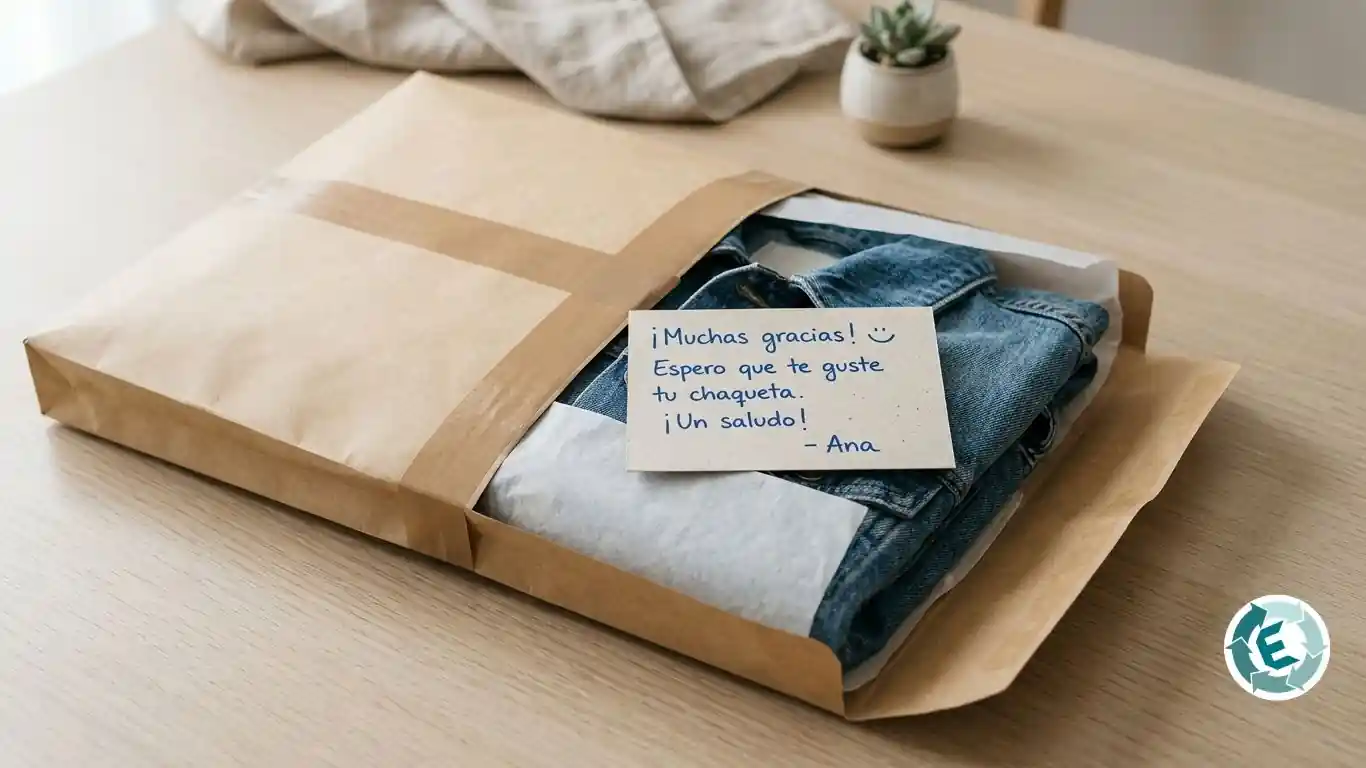
The parcel is the first physical contact between buyer and seller. Everything that had been digital until that moment (the listing, the photos, the conversation) materialises in that envelope or box that arrives at their door. And the experience of opening it matters far more than most sellers think.
A well-presented parcel doesn’t guarantee a 5-star review, but a careless one can generate a 3 or 4, even if the item is exactly what the buyer expected. The perception of care in the packaging transfers directly to the perception of care with the item and with the whole transaction.
There’s no need to invest in expensive materials. What matters is the feeling that there is care and intention:
- Clean envelope or box, with no tears or marks. If you reuse boxes, remove logos or labels from other shops: receiving an Amazon parcel covered in somebody else’s branding comes across as careless.
- The tape properly sealed and even. A parcel that looks like it could fall open by itself creates a sense of insecurity about the contents.
- The item folded carefully, without creases or lumps. If you ironed it for the photo, send it looking just as well presented.
- A sealed plastic bag inside the envelope or box, especially in rainy weather. An item arriving wet when it looked immaculate in the photo is one of the most common reasons for a negative review.
What never to do
- Bin bags as outer or inner wrapping.
- Boxes with advertising from other shops left uncovered.
- Clothing squeezed into an envelope that becomes misshapen.
- Items that are damp or smell musty without having been washed.
Visual presentation matters throughout the entire selling process, not just in the listing photos. Our guide on how to take the best photos to sell on Vinted and Wallapop explains how to build that perception of quality from the very first moment.
The detail inside the parcel: small effort, big impact
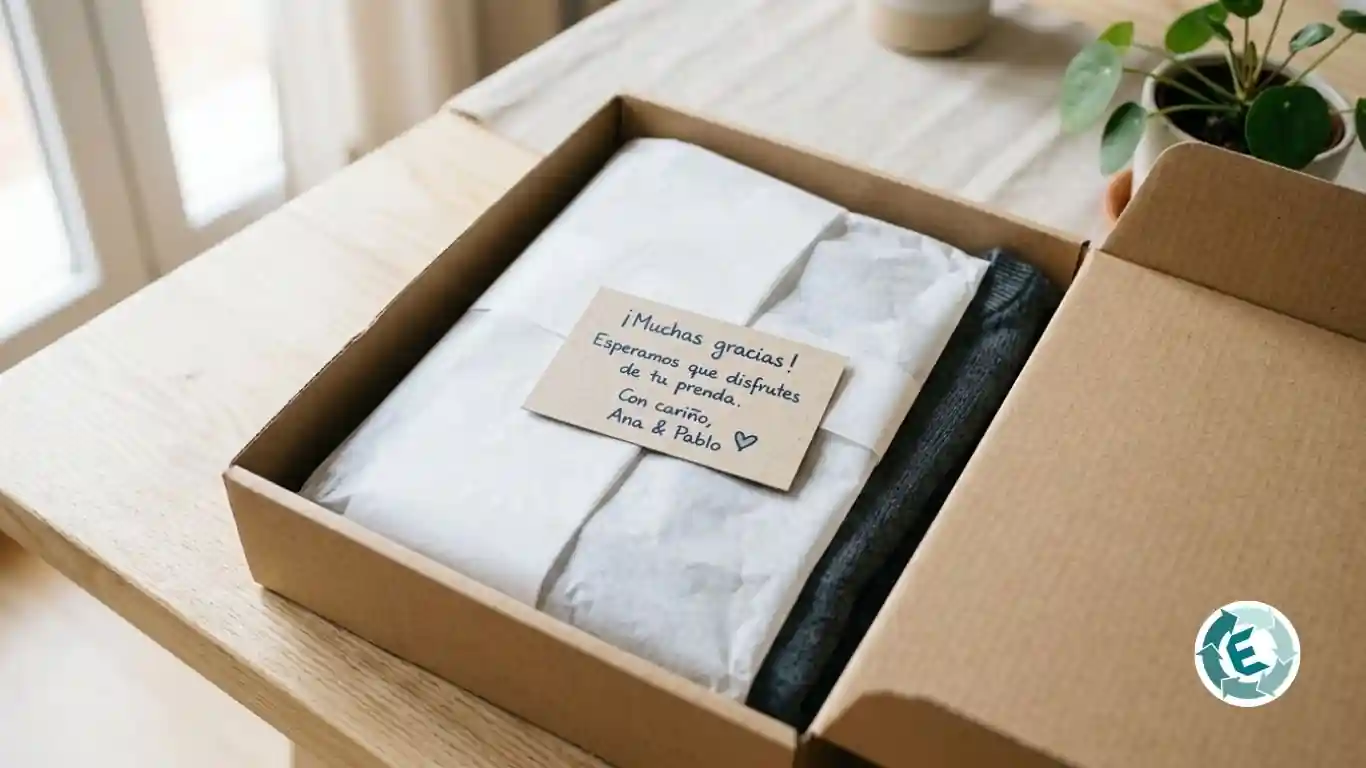
If there is one single element that appears mentioned repeatedly in the positive reviews of the best-regarded second-hand sellers, it’s the personal note inside the parcel. It’s not a corporate business card or a long letter: it’s three lines written by hand or printed with the buyer’s name and a brief thank-you.
The psychological effect is clear: in a market where most parcels arrive with just the item inside and nothing else, receiving something personalised makes the buyer feel there’s a real person on the other side, not a robot running sales on an assembly line. That generates reciprocity. And reciprocity generates reviews.
What the note should look like
It doesn’t need to be elaborate. These three elements are enough:
- The buyer’s name. “Hi, Anna” already completely personalises the experience.
- A specific thank-you phrase. Not a generic “thank you for your purchase”: “I hope it suits you as well as it suited me when I wore this coat.”
- A warm sign-off. “If you need anything at all, I’m here. Best regards, [your name or profile name].”
Three lines. Under a minute. And it’s what sets a profile apart from the rest most when the buyer decides whether to leave a review and how.
*Pro-tip: if you sell lots of items, prepare small printed cards with the base text and leave a space to write the name by hand. The cost is minimal and the result is the same as if you wrote each one from scratch.
The follow-up message: when and how to ask without being pushy
The timing of the follow-up message matters as much as its content. Sending it too soon (before the parcel has arrived) creates anxiety for the buyer and comes across as pressure. Sending it too late means the buyer has already moved on and is less likely to take the time to leave a review.
The optimal moment is between 24 and 48 hours after the shipping tracking shows the parcel has been delivered. At that point the buyer has just received the item, the experience is still fresh and they’re still within the review window of both platforms.
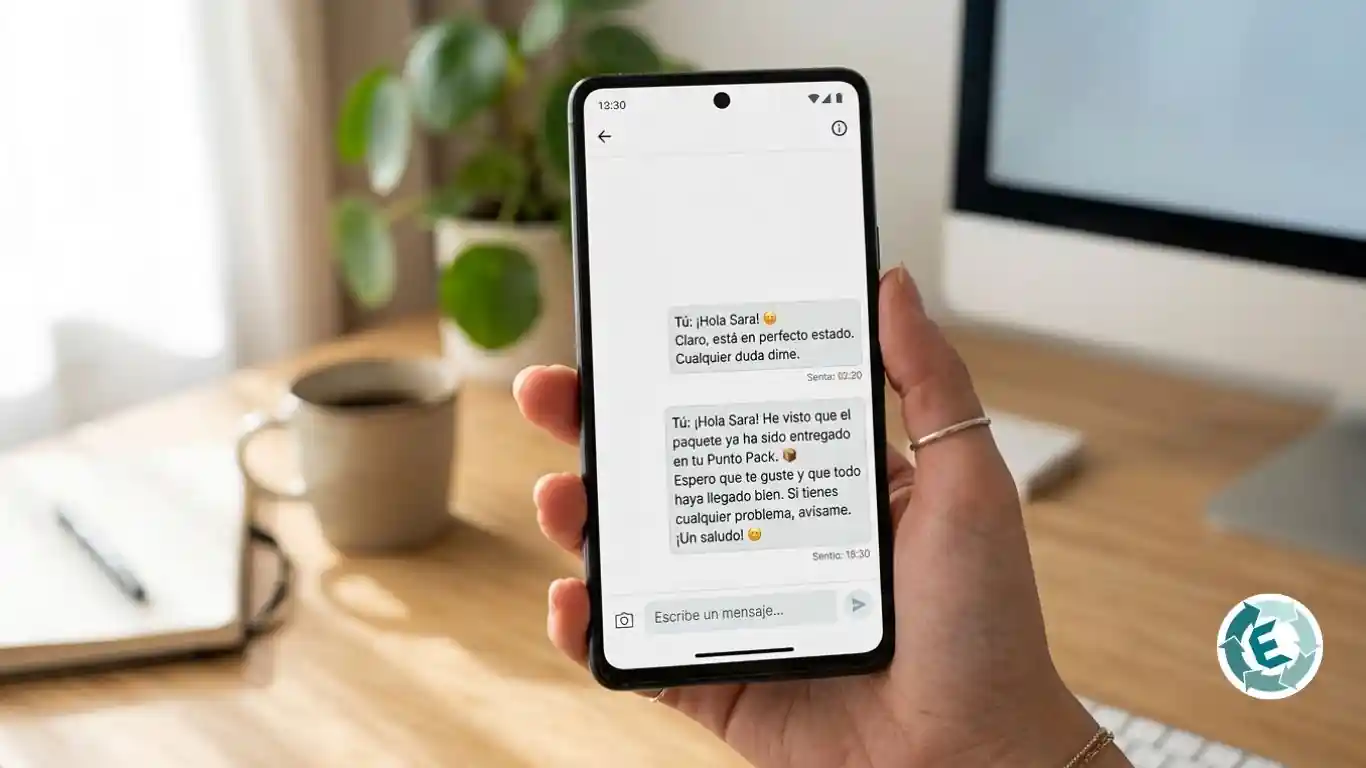
What to write and what not to write. A good follow-up message has three short parts:
- A greeting with the buyer’s name.
- A specific question about the delivery: “Did everything arrive OK?” or “Was the item as you expected?” An open, pressure-free question.
- A gentle reminder about the review, if you want to include it: “If everything went well, I’d really appreciate it if you left a review — it helps me to keep improving.”
What doesn’t work and should be avoided:
- Long, formal messages that look like corporate templates.
- Asking for the review before asking if the parcel arrived safely.
- Sending the same message twice if there’s no reply.
- Phrases that create obligation: “Don’t forget to leave a review”, “It’s very important to me that you review.”
On Wallapop the buyer has 14 days to leave their review from the moment they confirm receipt of the parcel or from when the 48-hour review window expires without action. Once that window closes, the option disappears. On Vinted the system is similar: the review can be left once the transaction is complete. Bearing this in mind helps calibrate when it makes sense to send the follow-up and when it’s already too late.
Frequently asked questions about reviews on Vinted and Wallapop
Can I ask a buyer to change a negative review on Vinted?
−You can contact the buyer privately to explain your point of view, but you can't oblige or pressure them to change the review. Vinted doesn't facilitate the process of modifying already-published reviews as a standard mechanism: its aim is to protect the authenticity of the system. In cases of reviews that break the platform's rules (offensive, false or unrelated content), you can contact Vinted support to request a review.
How long does a buyer have to leave a review on Wallapop?
+The buyer has 14 calendar days to review the transaction from the moment they confirm receipt of the parcel or from when the 48-hour review window expires without action. Once that deadline passes, the option to review disappears and cannot be recovered.
Is it worth including a small gift in the parcel to get a better review?
+A simple gesture (a personal note, a sweet, a thank-you card) can make a difference to the buyer's experience without costing almost anything. However, it's not about "buying" the review with a gift: it's about creating an experience that exceeds expectations.
What happens if the buyer doesn't leave a review?
+Nothing happens in terms of a penalty for your profile. Reviews are voluntary on both platforms. The follow-up message can encourage undecided buyers to review, but if they don't, there's nothing more you can do. Focus on accumulating reviews from the sales that do generate a response and the percentage of buyers who review will grow over time as your profile builds more trust.
Every sale is an investment in the next one
A positive review isn’t the end of a sale: it’s the start of the next one. Every 5 stars you accumulate means the next buyer who reaches your profile takes less time to decide, is willing to pay a little more and trusts your description a little more. The effect is slow at first and accelerates as the track record grows.
The cost of building that track record is low: tissue paper, three handwritten lines and a timely follow-up message. There is no pricing strategy, no photo improvement and no hashtag trick that has as direct and lasting a return on your sales as a solid reputation.
The only problem that arises when you start selling a lot is time: managing the follow-up for each sale, remembering which buyer you sent what, when the parcel arrived and when to send the message is administrative work that scales badly. EasyWList keeps your inventory organised with the status of each item visible at a glance (in inventory, listed, sold), so you never lose track of what has sold on Vinted and what still needs to be uploaded to Wallapop. Less time managing means more energy for the parts of the process that actually generate reviews: the packaging, the note and the follow-up.
The beta is free. Start using it today and build the profile that sells itself.